
The Risk Behind Manual Lifting in Heavy Industries and Its Impact on Manual Lifting Safety
Manual handling injuries are among the leading causes of lost time incidents (LTI) worldwide. Manual lifting in heavy industries cannot be understood through the narrow lens of “picking up heavy objects.” That simplified definition belongs to warehouse ergonomics and light industrial settings. In heavy industries, manual lifting represents a far more complex interaction between human biomechanics, irregular industrial loads, unpredictable environments, and operational time pressure.
The first mistake organizations make is treating manual lifting as an isolated task. In reality, it is an embedded condition of industrial work.
A technician aligning a pipeline spool is manually lifting.
A worker stabilizing a suspended valve during installation is manually lifting.
An operator dragging high-pressure hoses across uneven ground is manually lifting.
A crew member repositioning a gas cylinder in a confined space is manually lifting.
Manual lifting, in heavy industry, is not a single motion — it is an interaction phase between mechanical systems and human control.
The Nature of Industrial Loads and Their Influence on Manual Lifting Safety
Unlike consumer goods or warehouse cartons, industrial components are rarely designed for human grip. They are designed for function — not handling.
Pipes are cylindrical and smooth. They rotate easily and offer no natural handholds. Their surface friction changes depending on coatings, moisture, or oil residue. When workers grip a pipe directly, they must generate friction through force rather than structure. This increases muscular strain and hand fatigue immediately.
Hoses introduce a different challenge. They are flexible, resistant to directional change, and often carry internal pressure or fluid weight. Dragging a hose across gravel or steel decking introduces frictional resistance that requires sustained force rather than momentary lifting effort. Sustained force is biomechanically more damaging over time because it creates prolonged muscle tension and reduced blood circulation.
Gas cylinders present another complexity. They are vertically oriented with a high center of gravity. A slight imbalance shifts load direction rapidly. When gripped directly, there is minimal control over torque if the cylinder tilts. Workers compensate instinctively — tightening grip, bending awkwardly, adjusting stance — all of which increase joint stress.
Industrial components are rarely ergonomic by design. They are functional objects that demand adaptation from the human body. That adaptation is where strain originates — and where manual lifting safety must intervene.
Manual Lifting as a Biomechanical Event: The Foundation of Manual Lifting Safety
To understand manual lifting risk deeply, one must look at biomechanics rather than weight alone.
When a worker bends forward to grasp a pipe at ground level, the spine does not simply support the load’s mass. It supports amplified force created by leverage. The further a load is from the body’s center of gravity, the greater the compressive force on the lumbar discs.
Even a moderate 20–25 kg load can generate spinal compression far exceeding safe thresholds when lifted in forward flexion. Add instability or rotation, and shear forces are introduced. Shear forces are particularly dangerous because they stress spinal discs horizontally, increasing the risk of disc bulging or herniation over time.
Now consider repetition. In heavy industries, these motions are rarely isolated. Workers may repeat bending, stabilizing, adjusting, and repositioning dozens of times in a shift. The spine does not fail from a single repetition — it deteriorates from cumulative exposure.
Manual lifting, therefore, is not about dramatic accidents. It is about incremental biomechanical fatigue — the silent erosion of manual lifting safety.
Environmental Amplifiers and Their Effect on Manual Lifting Safety
Heavy industries introduce environmental amplifiers that transform moderate tasks into high-risk exposures.
An offshore platform may subtly shift underfoot. This instability requires constant micro-adjustments in balance, increasing muscular demand. Uneven surfaces force asymmetrical posture. Oily decking reduces traction, causing workers to tighten muscles defensively to maintain stability.
Confined spaces restrict natural lifting posture. Workers cannot always position their feet optimally. They twist, reach, or lift sideways because the environment demands it.
Extreme temperatures alter muscle elasticity. Cold reduces flexibility and increases injury susceptibility. Heat accelerates fatigue and dehydration, weakening muscular endurance.
Noise and operational urgency create psychological load. Under time pressure, workers are less likely to pause, reposition, or request assistance. They prioritize completion over posture.
Manual lifting in heavy industries is therefore not simply physical — it is environmental, psychological, and systemic. Manual lifting safety must address all three dimensions.
Cumulative Trauma and Long-Term Manual Lifting Safety Risk
Most manual lifting injuries in heavy industries are not dramatic incidents. They are slow developments.
A worker may not report pain for months. Discomfort becomes normalized. “It’s just part of the job.” By the time medical evaluation occurs, degeneration has progressed.
Musculoskeletal disorders often stem from microtrauma — small stresses applied repeatedly without sufficient recovery. Muscles fatigue first. Fatigued muscles lose stabilizing ability. Ligaments absorb excess strain. Intervertebral discs endure repeated compression and shear.
The damage accumulates silently.
Organizations often measure safety success by counting acute injuries. Manual lifting risk hides in long-term health outcomes — absenteeism, chronic back pain, early retirement, decreased productivity, compensation claims.
If manual lifting safety is evaluated only by accident reports, the true burden remains invisible.
Why Traditional Controls Fall Short in Manual Lifting Safety
For decades, manual handling safety programs have relied heavily on behavioral training. Workers are taught to bend their knees, keep loads close, avoid twisting, and team lift when necessary.
These principles are biomechanically sound in theory. But they assume an ideal scenario: stable footing, accessible load geometry, adequate space, and reasonable frequency.
Industrial reality rarely offers ideal conditions.
Workers cannot keep loads close when the object lacks grip points. They cannot avoid twisting when alignment requires rotation. They cannot maintain neutral posture when working inside structural constraints.
Training addresses knowledge. It does not change physics.
Administrative controls also rely on worker compliance. Under operational pressure, behavior shifts. Engineering controls, in contrast, modify the task itself.
Manual lifting safety must move higher in the hierarchy of controls. It must shift from instructing workers how to endure strain to redesigning the interaction that creates strain.
Engineering Manual Lifting Safety: A Systems Approach
True manual lifting safety begins by recognizing that the human body has biomechanical limits. These limits are predictable. They can be studied, quantified, and respected.
A systems-based approach examines:
Load geometry
Load stability
Frequency of handling
Environmental conditions
Required posture
Duration of exposure
Rather than asking, “Is this lift too heavy?” the better question is:
“How does this task distribute force across the musculoskeletal system over time?”
Engineering manual lifting safety means:
Designing interfaces that improve grip geometry.
Reducing forward spinal flexion through elevated handling points.
Minimizing asymmetrical loading.
Increasing clearance from pinch zones.
Reducing sustained drag force.
Structuring tasks to limit repetition intensity.
It means acknowledging that manual lifting will never disappear entirely — but unmanaged exposure can.
Integrating Manual Lifting Safety into Organizational Strategy
Manual lifting safety must be embedded into risk management systems rather than treated as an isolated ergonomic concern.
During Job Hazard Analysis, manual handling should be assessed not only for weight but for posture, repetition, instability, and environmental constraints.
Ergonomic assessment tools can quantify exposure by analyzing angles of flexion, torque generation, and repetition cycles.
HSE frameworks such as ISO 45001 emphasize hazard elimination and engineering control before administrative reliance. Manual lifting safety fits directly within this philosophy.
Organizations that take manual lifting safety seriously do not simply reduce injury rates. They preserve workforce longevity. They maintain skill retention. They reduce compensation liabilities. They strengthen safety culture.
Applying Engineered Manual Lifting Safety Controls in Real Industrial Conditions
The principles outlined earlier — force separation, biomechanical protection, elimination of pinch exposure, and engineered distance — must ultimately translate into practical field execution.
Heavy industry does not operate in ideal ergonomic laboratories. It operates in:
Congested pipe racks
Uneven terrain
Confined mechanical rooms
Offshore decks
Muddy construction zones
High-temperature processing areas
Shutdown and turnaround environments
In these conditions, manual lifting becomes less about ideal posture and more about managing imperfect geometry under real operational pressure.
This is where engineered manual lifting systems transition from theoretical control measures to operational necessities.
Converting Irregular Loads into Controlled Interfaces for Manual Lifting Safety
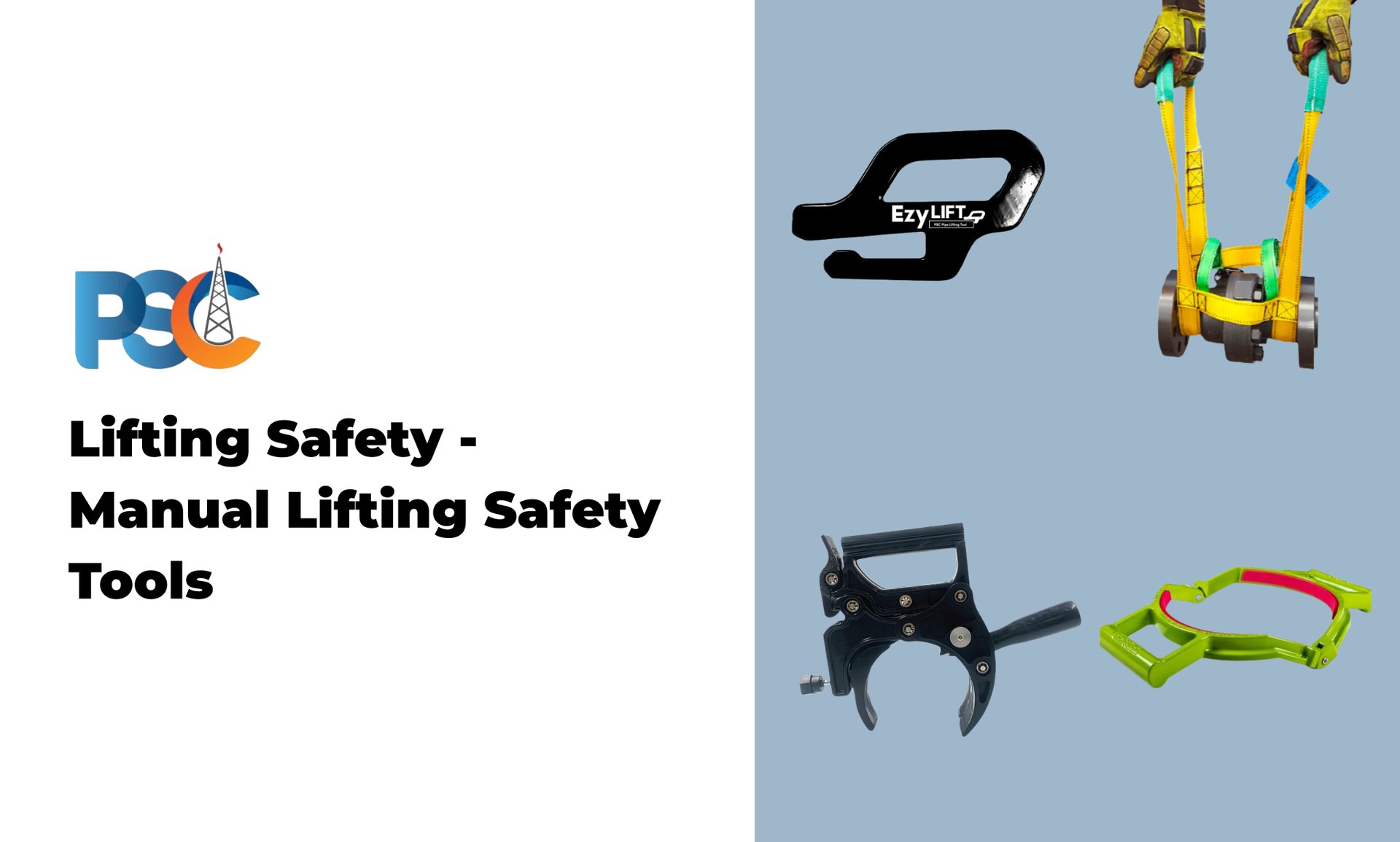
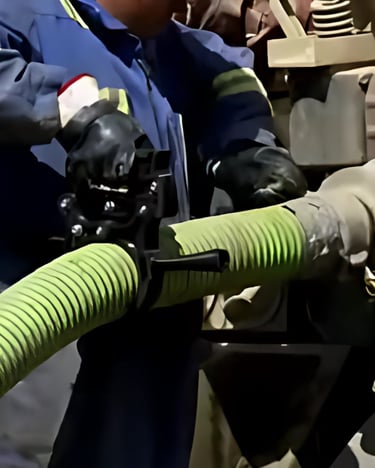
PSC Lift Assist – Manual Lifting Aids
A recurring challenge in heavy industries is handling components that lack defined grip geometry. Valves, fittings, couplings, mechanical parts, and fabricated items often provide no safe contact points. Workers compensate by gripping edges, undersides, or unstable surfaces.
This leads to:
Finger pinch exposure
Grip fatigue
Wrist deviation
Spinal compression due to awkward posture
Manual lifting aids such as PSC Lift Assist systems address this issue by transforming irregular objects into structured handling units.
Rather than allowing the body to adapt to the object, the interface adapts the object to the body.
By introducing engineered lifting geometry, these aids:
Distribute load forces more evenly
Maintain neutral wrist positioning
Reduce direct palm-to-metal compression
Minimize sudden slip risk
Improve team lift symmetry
From an HSE systems perspective, this represents ergonomic engineering — not assistance.
It is the controlled redesign of the human-load interface.

Addressing Cylindrical Load Instability to Improve Manual Lifting Safety
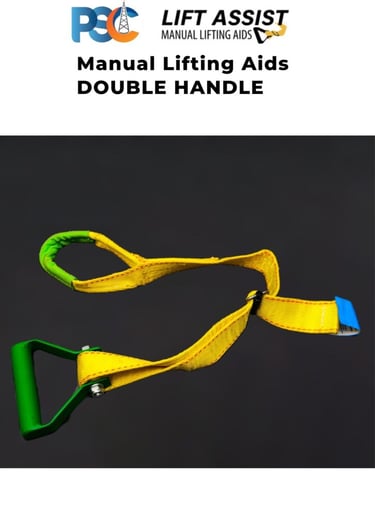
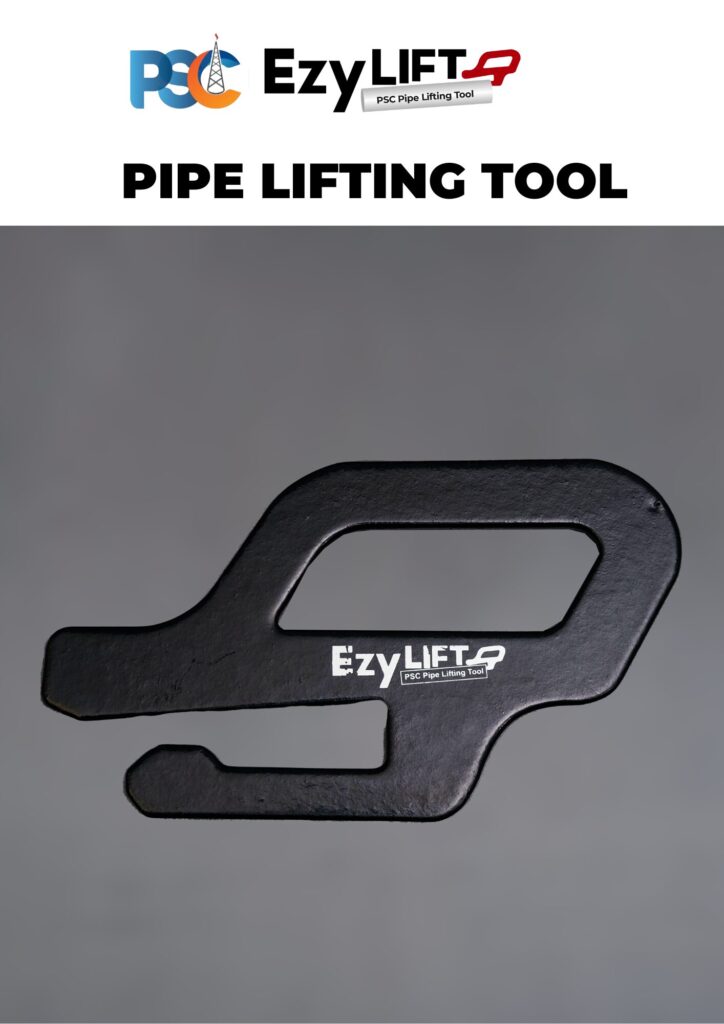
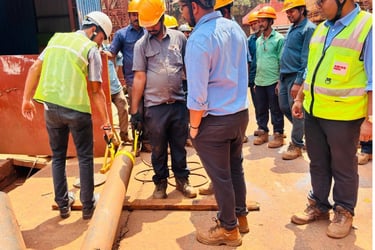
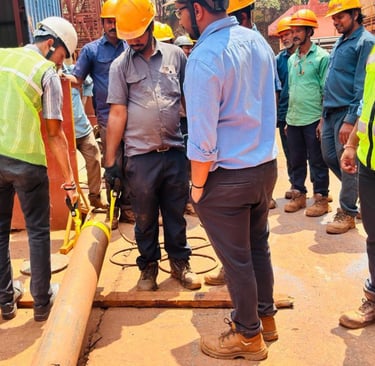
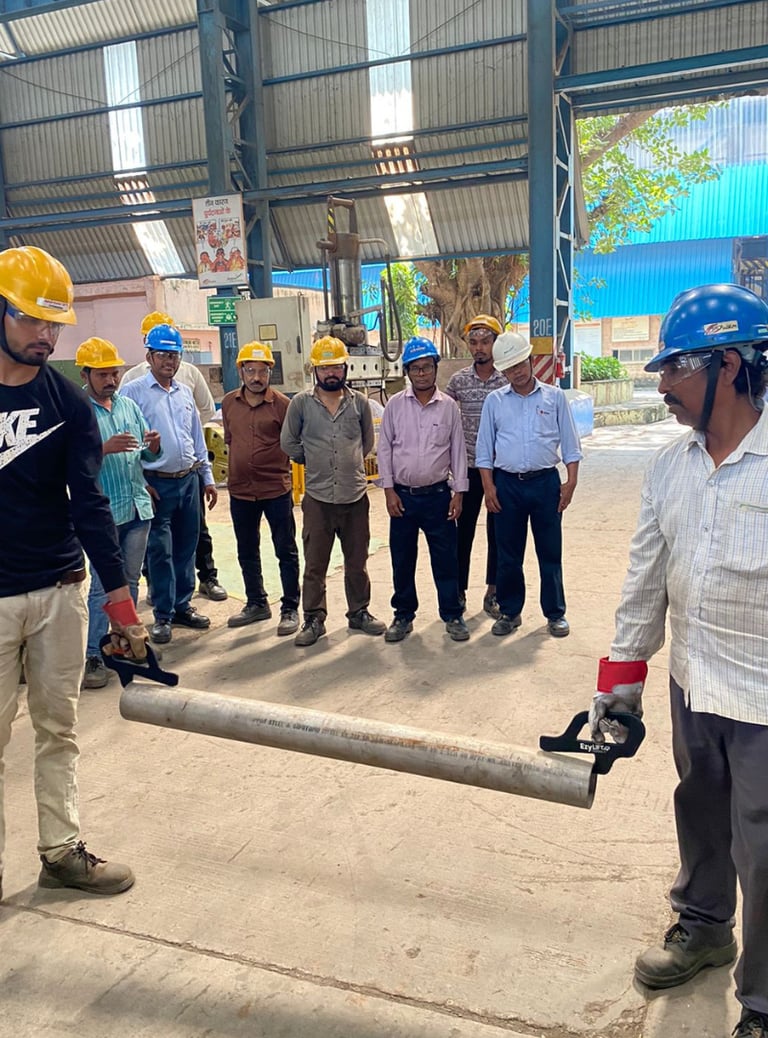
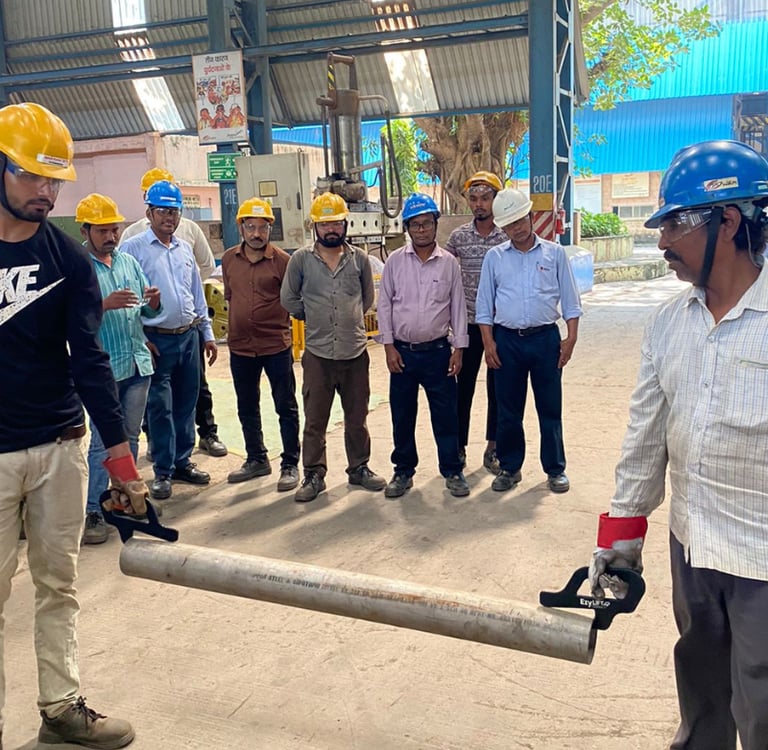
PSC EZY LIFT Pipe Lifting Tool
Cylindrical objects such as pipes present unique instability hazards. Their round geometry resists stable grip. Minor torque creates roll. When multiple workers attempt synchronized lifting, imbalance frequently occurs.
Common exposure patterns include:
Pipe roll during elevation
Finger pinch between pipe and ground
Asymmetric shoulder loading
Lumbar shear due to uneven hand placement
Wrist strain from compensatory grip tightening
The PSC EZY LIFT Pipe Lifting Tool addresses this by introducing structured contact and leverage points specifically engineered for cylindrical geometry.
Instead of gripping a curved, unstable surface, workers engage a designed lifting interface that:
Creates mechanical advantage
Reduces reliance on friction
Controls roll tendency
Maintains spinal neutrality
Improves lift coordination
This is not merely easier lifting. It is biomechanically stabilized lifting.
By controlling the inherent instability of pipe geometry, the tool removes one of the most common triggers for both acute and cumulative manual handling injuries.
Enhancing Posture and Load Symmetry in Manual Lifting Safety Programs
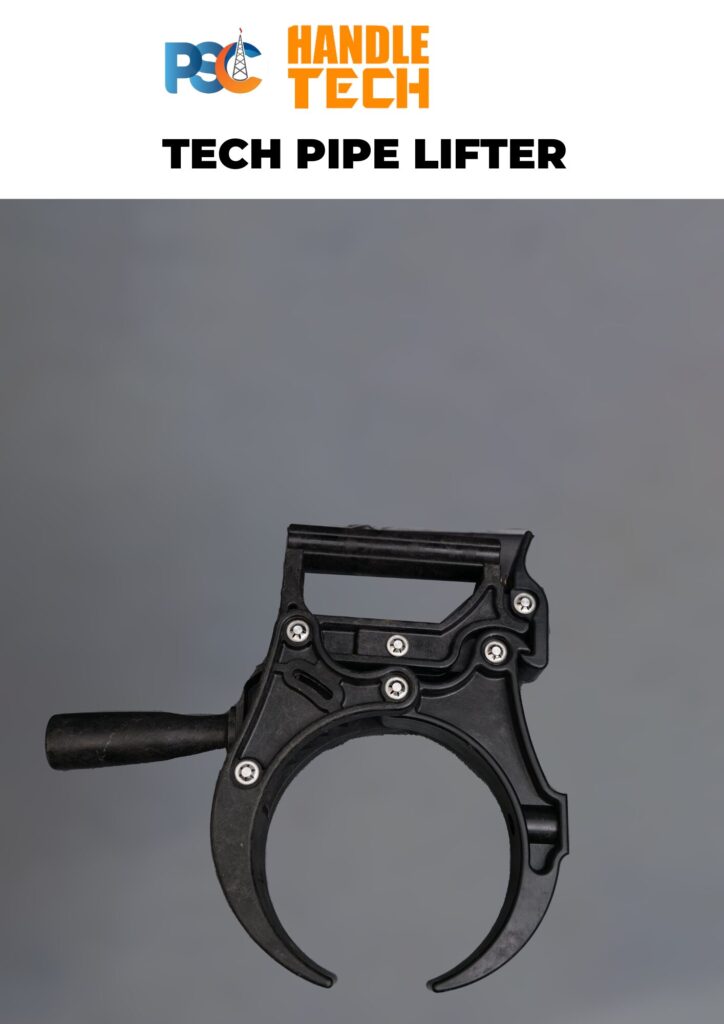
PSC Handle Tech Pipe Lifter
While cylindrical loads create instability challenges, repetitive pipe handling introduces cumulative musculoskeletal stress.
Workers often bend repeatedly to ground level, grip pipes at awkward angles, and perform repetitive repositioning movements. Over time, this results in:
Lower back strain
Shoulder overuse
Forearm fatigue
Decreased grip endurance
Increased error probability due to fatigue
The PSC Handle Tech Pipe Lifter shifts the handling axis upward, allowing workers to engage pipes from a more biomechanically neutral posture.
By elevating the interface and improving grip geometry, it:
Reduces lumbar flexion
Minimizes repetitive bending
Improves load symmetry
Decreases upper limb strain
Enhances manual control precision
From an occupational health perspective, this is critical.
Musculoskeletal disorders are rarely caused by a single catastrophic event. They develop from repeated micro-strain under suboptimal posture.
Structured pipe lifting systems directly intervene in this cumulative injury pathway.
Stabilizing Vertical Load Handling for Advanced Manual Lifting Safety
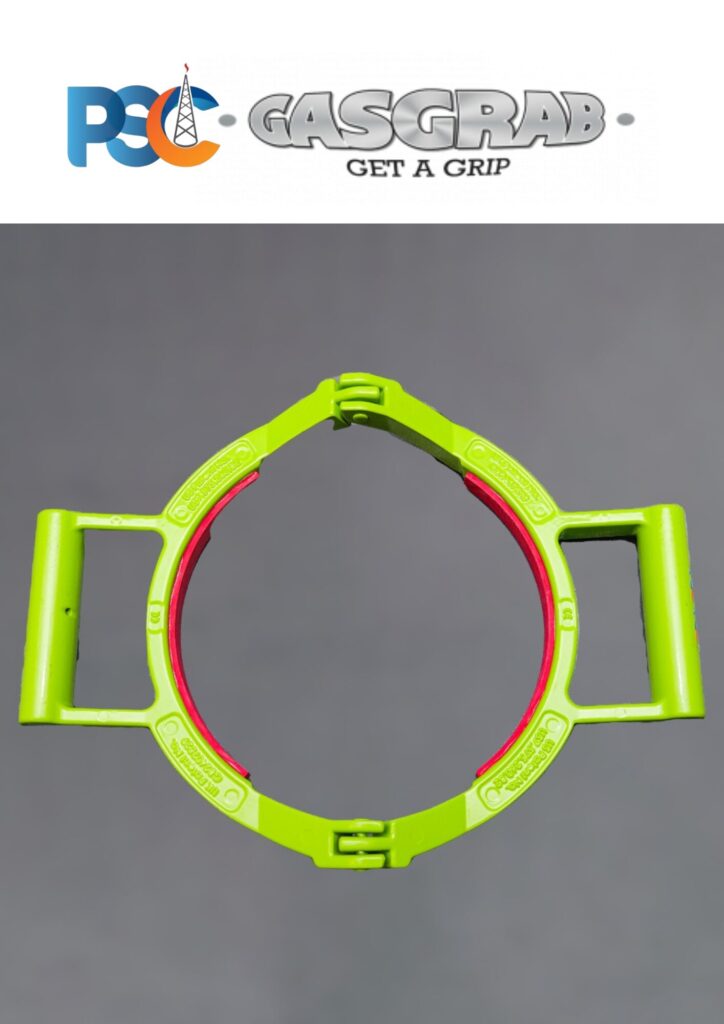
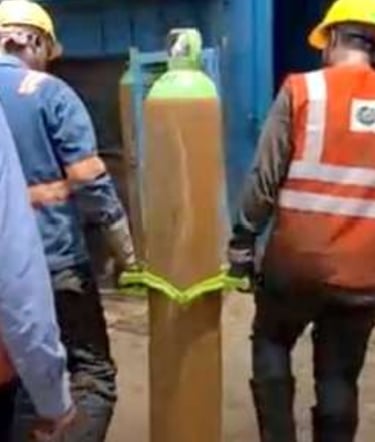
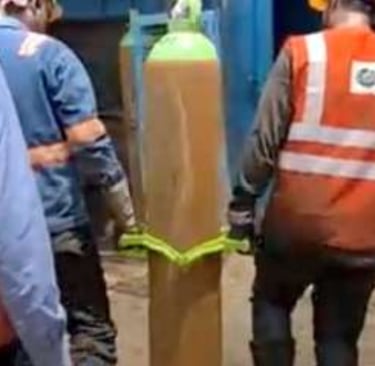
PSC Gas Grab
Gas cylinders and vertical vessels represent a distinct manual lifting hazard. Their height, narrow footprint, and shifting center of gravity make them inherently unstable during manual repositioning.
Common risks include:
Tip-over events
Hand crush between cylinder and fixed structure
Finger pinch during correction
Sudden weight shift during lift
Compensatory twisting of the spine
The PSC Gas Grab introduces an engineered stabilization interface that:
Improves grip security
Maintains hand clearance from pinch zones
Controls tilt initiation
Enhances load predictability during movement
Reduces need for reactive stabilization
This intervention does not eliminate manual handling — it restructures it.
By improving load predictability and control geometry, it reduces the likelihood that workers will instinctively reposition hands into hazardous zones during correction.
Embedding Engineered Tools into a Manual Lifting Safety Architecture
The true value of engineered lifting systems emerges when they are integrated into formal safety frameworks.
These systems should be incorporated into:
Task risk assessments
Manual handling risk evaluations
Method statements
Ergonomic audits
Job Safety Analyses (JSA)
Toolbox talk planning
ISO 45001 occupational health frameworks
When integrated systematically, they shift the organization from reactive injury management to proactive exposure reduction.
Instead of recording musculoskeletal incidents and retraining staff, the physical stressors are reduced at the task level.
Instead of investigating hand injuries after pinch events, the interface geometry is redesigned.
This is how safety maturity evolves.
From Tool Adoption to Manual Lifting Safety Standardization
When organizations standardize engineered manual lifting aids such as:
PSC Lift Assist Manual Lifting Aids
PSC EZY LIFT Pipe Lifting Tools
PSC Handle Tech Pipe Lifters
PSC Gas Grab
They are not expanding their tool inventory.
They are reducing uncontrolled human exposure to industrial force systems.
The long-term outcomes include:
Reduced cumulative trauma disorders
Lower recordable injury rates
Decreased lost-time incidents
Improved workforce confidence
Stronger compliance posture
Enhanced operational efficiency
Most importantly, they align manual lifting practices with modern engineering principles — transforming manual lifting safety from a reactive training topic into a structured, engineered control system embedded within industrial operations
Let’s discuss your safety requirements.
📞 +91 9100932334
📧 info@projectsalescorp.com
🌐 pschandsfree.com
PSC Lift Assist Manual Lifting Tools
PSC EZY Lift
PSC Gas Grab
PSC Handle Tech Pipe Lifter
3A, 3rd floor, Founta Plaza, Suryabagh, Visakhapatnam-530020, AP, India.
+91 9100932334
info@projectsalescorp.com
pschandsfree.com
Dubai Silicon Oasis, Building A1, IFZA Business Park, DDP, Dubai, United Arab Emirates
(+971) 50-457-2844
info@pscdubai.com
pscdubai.com
134 Vintage Park Blvd, Ste A #1006, Houston, TX 77070
(984) 322-1807
info@pschoustonllc.com
pschoustonllc.com